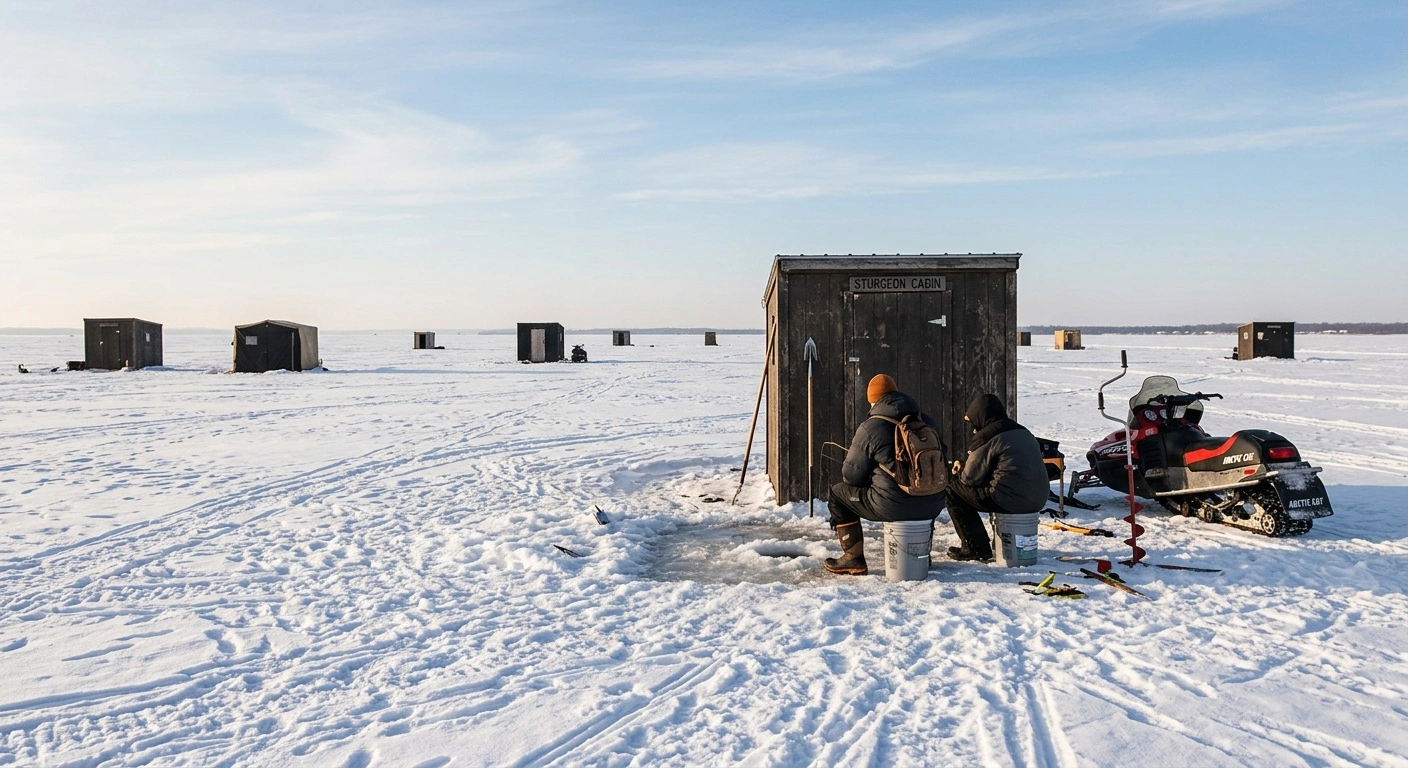
Sturgeon spearing Lake Winnebago takes patience, preparation, and hours inside a darkened shanty. Spearers watch a bright rectangle of lake bottom for a fish that may never appear. They use decoys and hand-thrown spears rather than rods, hooks, or bait. Before February, review current Wisconsin DNR rules and reliable local ice reports.
Water clarity, safe ice access, and careful setup shape the experience. Some crews see several lake sturgeon, while others watch an empty hole for days. The season remains an important tradition in communities around Lake Winnebago. However, first-time participants must treat it as a regulated harvest, not an ordinary ice-fishing trip.
How Sturgeon Spearing Lake Winnebago Works
A typical setup starts with a large rectangular opening cut through the ice. A darkhouse or shanty encloses the opening and blocks outside light. This darkness helps the spearer see through the water and, in clear conditions, down to the bottom.
The crew suspends a decoy below the opening and moves it occasionally. A passing sturgeon may approach or turn toward the movement. The spearer throws only after identifying the fish and judging its position. Long periods may pass without a sighting.
Lake Winnebago’s broad, shallow basin creates different conditions across the lake. Wind before freeze-up can stir sediment, while runoff and algae may reduce visibility. Under-ice conditions can also change during winter. A clear location one year may offer poor visibility the next.
For that reason, local reports matter. Experienced crews prepare early but adjust their plans as conditions change. Sometimes the safest choice is a new access point. In other cases, poor clarity may call for lower expectations or a canceled trip.
When the February Season Is at Its Best
The Wisconsin DNR schedules the Lake Winnebago sturgeon spearing season during a limited February window. Harvest caps can end the season before its maximum scheduled length. Participants should check the official harvest status each day. Never rely on dates or procedures from a previous year.
The most favorable conditions combine stable ice with clear water. Bright daylight can improve visibility inside a properly darkened shanty. Clouds, snow cover, and drifting snow may reduce the light reaching the opening.
Weather before the season also matters. Strong winds before freeze-up can disturb bottom sediment. Later, runoff and changing snow cover may affect water clarity. Cold weather can build ice, but it cannot make every route safe.
Pressure ridges, cracks, currents, and refrozen openings require particular care. Conditions near connecting waters may differ from those on the main lake. Check each route rather than assuming the entire lake has similar ice.
| Period | What to Expect | What to Do |
|---|---|---|
| Weeks before the season | Changing ice routes and early water-clarity reports | Confirm licensing, inspect equipment, and follow local fishing club updates |
| Opening days | Heavy traffic at popular access points and frequent harvest updates | Arrive early, follow established routes, and confirm that the season remains open |
| Later in the season | Possible changes in ice, weather, and harvest status | Recheck conditions daily and never assume an earlier route remains safe |
Choosing a Place to Spear
A suitable spearing location needs clear water, workable depth, and a visible bottom. Crews often watch broad flats or subtle changes in bottom structure. However, productive areas vary by year and current conditions.
A pale sand or gravel bottom makes a dark fish easier to see. Weeds, silt, and darker bottom material can hide a sturgeon’s outline. Some spearers use light-colored bottom material where current regulations permit it. Every covering, decoy, and attractor must follow current DNR rules.
Do not choose a location simply because shelters or old holes suggest past success. You still need safe access and a legal opening location. Avoid marked travel lanes and areas that interfere with other crews.
Local fishing clubs may maintain roads or bridge pressure cracks. Their work improves access but does not guarantee safe ice. First-time visitors should ask a club or bait shop about current routes and clarity. Following vehicle tracks without context can lead onto unsafe ice.
Reading the Water Below the Darkhouse
After closing the shelter, give your eyes time to adjust. Keep the interior as dark as practical. Loose clothing, snow, and reflective equipment can cast distracting light into the opening.
Lower the decoy until you can see it without losing sight of the bottom. Gentle movement often appears more natural than constant jerking. Use long pauses. A sturgeon may first appear as a faint shadow near the opening’s edge.
Never throw at an unidentified shape. Other fish may pass below, and cloudy water can distort size and distance. Wait until you can identify a lake sturgeon and confirm a legal opportunity.
A rushed throw may wound a fish, lose equipment, or endanger people in the shelter. Clear communication helps when several people share the darkhouse. Everyone should stop moving when the spearer prepares to throw.
Decoys, Spears, and Basic Setup
Sturgeon decoys include fish-shaped designs and other legal objects that attract attention. Spearers disagree about the most effective colors and movements. No decoy guarantees that a fish will approach.
Bring several legal options if space allows. You can change the color, profile, or motion to suit visibility. Before using any design, confirm that it meets current DNR requirements.
Choose a spear designed for sturgeon spearing and attach a strong tether. Inspect the rope, spear head, knots, and attachment points before the season. Keep the spear controlled whenever anyone stands near the opening.
The shanty must block light and provide enough room for safe spear handling. If you use a heater, maintain the ventilation specified by its manufacturer. Fuel-burning equipment can produce deadly carbon monoxide inside an enclosed shelter.
Use equipment approved for the intended setting. A carbon-monoxide detector adds an important warning layer. Keep chairs, heater hoses, propane cylinders, and loose gear outside the throwing area.
- Spearing equipment: A legal sturgeon spear, strong tether, legal decoys, and dependable decoy lines.
- Hole equipment: Proper cutting tools, ice tongs or block-handling equipment, and required marking materials.
- Shelter equipment: A darkhouse, stable seating, adequate ventilation, and a carbon-monoxide detector when using fuel-burning heat.
- Personal equipment: Layered clothing, waterproof gloves, traction aids, food, water, and eye protection for hole cutting.
- Administrative items: Current licenses, required records, and access to official season and harvest updates.
Cutting and Managing a Spearing Hole
A sturgeon spearing opening is much larger than an auger hole. Cutting one requires proper tools, experienced help, and a clear plan. Current Wisconsin DNR rules govern the opening’s size, use, and marking.
Crews often remove or shift a heavy block of ice. This process creates lifting, cutting, and pinch hazards. Keep bystanders away while cutting. Decide how to control the block before making the final cuts.
Powered saws and specialized cutters add blade, noise, and exhaust hazards. Only experienced operators should handle them. Wear appropriate protective equipment and maintain clear communication throughout the job.
Protect the opening whenever you move or remove the shelter. Thin new ice and drifting snow can hide an abandoned hole. That hole can injure walkers or trap snowmobiles and vehicles.
Follow current DNR requirements for marking or securing the opening after use. Never assume another crew will handle it. Do not leave an unmarked opening near a travel route.
Ice Safety Comes First
No ice is guaranteed safe. Lake Winnebago regularly develops pressure ridges, cracks, and areas of open water. Conditions can differ between shorelines and along nearby routes.
Check with local fishing clubs and bait shops before leaving shore. Ask about marked roads, bridge locations, closures, and recent trouble areas. Vehicle tracks do not prove that a route remains safe.
Wind, temperature, snow, traffic, and moving ice can alter conditions quickly. Morning guidance may no longer apply that afternoon. Turn around if a route looks different from the latest report.
Carry ice picks where you can reach them. On foot, use a spud bar to test questionable ice. Wear a properly fitted flotation device and tell someone your route and return time.
A floating ice-fishing suit can provide added protection, but it cannot replace sound judgment. Keep a charged phone in a waterproof pocket. A throw rope, dry clothing, and emergency supplies also belong in the safety kit.
Avoid traveling alone, especially before daylight or after dark. Poor weather increases navigation problems and slows emergency response. If local reports conflict, stay ashore until you can verify conditions.
Vehicles, Pressure Ridges, and Marked Routes
Driving onto Lake Winnebago adds weight, speed, and limited escape options. Base vehicle access on current local guidance. What worked during a previous winter may not work today.
Pressure ridges can move, widen, or separate. Clubs may relocate or close their bridges as the ice shifts. Cross only where the active marked route directs traffic. Never improvise a crossing beside a bridge.
Keep your speed conservative and leave extra room between vehicles. Closely spaced vehicles concentrate weight on the ice. Follow local parking and spacing instructions near shanty areas.
Discuss emergency procedures with every passenger before leaving shore. Seek current vehicle safety advice from local authorities rather than making last-minute decisions. If officials discourage vehicle travel, use the locally recommended alternative or postpone the trip.
Licenses, Harvest Caps, and Registration
Lake Winnebago sturgeon spearing requires a season-specific license. The Wisconsin DNR sets an advance purchase deadline, so do not wait until February. An ordinary fishing license does not replace the required sturgeon spearing license.
Other Wisconsin fishing privilege requirements may also apply. Rules can differ between Lake Winnebago and the Upriver Lakes. Make sure your license covers the water where you plan to participate.
Direct licensing questions to the Wisconsin DNR or an authorized license agent before the deadline. Also confirm how visitor participation affects licensing. Watching, handling equipment, and actively spearing may carry different requirements.
The DNR uses harvest caps to manage the season. Reaching those caps can trigger an early closure. Check official season updates each day rather than relying on word of mouth.
Successful spearers must follow current tagging, possession, transportation, and registration procedures. The DNR may specify registration stations, reporting deadlines, and biological sampling requirements. These details can change between seasons.
Review the current Lake Winnebago System sturgeon spearing information before your trip. Check it again every day you participate. If the DNR announces a closure, stop spearing according to its stated timeline.
Why Sturgeon Spearing Does Not Have a Traditional Bite
Sturgeon do not take a hook or bait during this spearing season. Instead, the action remains entirely visual. A fish may approach a decoy, cross the opening, or disappear before offering a clear opportunity.
Some sturgeon move steadily without turning. Others pause or investigate the decoy. After hours of watching, a productive day may offer only one brief chance.
Even clear water does not guarantee a sighting. A crew may spend several days over good bottom without seeing a fish. That uncertainty shapes both the pace and the tradition.
Crews often share watching, food preparation, heat management, and equipment checks. Still, someone must stay attentive whenever the spear is ready. Keep the spear handler sober and focused. Alcohol, sharp equipment, and a large ice opening create an unsafe combination.
Access, Parking, and Shoreline Logistics
Winter access begins at shoreline landings and locally monitored routes. Potential starting areas include Oshkosh, Fond du Lac, and communities along the east, west, and north shores. Actual access depends on current ice and road conditions.
Not every summer boat launch supports winter vehicle traffic. Some landings may remain unplowed or closed. Others may lack enough space for trailers and large shanties.
Parking often fills early during opening weekend. Follow posted rules and keep emergency lanes clear. Leave enough room for crews moving shelters and equipment between shore and lake.
Some routes rely on fishing club road and bridge work. Clubs may request voluntary contributions or provide route-specific instructions. Contact the responsible organization instead of using an outdated map.
Bait shops can provide recent clarity reports, supplies, and general directions. Call before making a long drive. Winter hours may change during poor weather or after an early season closure.
Planning a First Sturgeon Spearing Trip
A first trip goes more smoothly with an experienced Lake Winnebago crew. Hole cutting, shelter placement, water reading, and spear handling require hands-on skill. Written instructions cannot fully show how a crew coordinates those tasks.
If you do not know a spearer, contact a local fishing club. Ask about educational events, mentorship, or opportunities to observe. Confirm whether the crew allows visitors inside the shelter.
Also verify how your planned role affects licensing requirements. Do not handle a spear or other regulated equipment based on assumptions. Ask the DNR when the rules are unclear.
Set aside a full day because setup and removal take time. Remain willing to cancel when ice or weather deteriorates. A shore-based backup plan can keep a canceled weekend from becoming a risky one.
Oshkosh and Fond du Lac offer year-round lodging and dining. Smaller lakeside communities may keep limited winter hours. Before arrival, confirm that your lodging can accommodate a trailer or large shanty.
Weather and Gear for a Long Day on the Ice
February can bring severe cold, strong wind, wet snow, or temperatures near freezing. Dress in removable layers under a wind-resistant shell. Insulated waterproof boots help during slushy hole work.
Bring spare gloves because water and condensation can soak the first pair. Traction cleats help on polished ice. Remove or cover them if they could damage the shelter floor.
Snow and bright ice reflect considerable daylight. Pack sunglasses and sunscreen even though most watching occurs inside the shanty. Eye protection also matters while cutting the opening.
Lake Winnebago’s open surface leaves travelers exposed to wind. Check wind direction, snowfall, and expected temperature changes before leaving shore. A warm shelter does not make the trip across the lake safe.
Pack enough food, water, and medication for unexpected delays. Keep those supplies away from the hole and throwing area. A first-aid kit, fire extinguisher, carbon-monoxide detector, and charged phone support a prepared shelter.
Respecting the Fish and the Tradition
Lake sturgeon live for decades. The DNR manages the Winnebago System population through licenses, harvest caps, registration, and long-term biological monitoring. Careful fish identification supports that work.
Never take a questionable throw. Treat every reporting and registration step as part of the harvest. After taking a fish, follow current handling and transportation instructions.
Move through the required registration process within the specified time. Biological staff may collect measurements or samples. Those records help managers track the population and set future regulations.
Respect also applies to neighboring crews and the lake. Limit unnecessary noise and traffic near occupied shanties. Do not block marked roads, and pack out every piece of trash.
Remove equipment and marking materials as current rules require. The tradition depends on more than harvesting a sturgeon. Safe conduct, legal participation, and responsible fishery management keep it going.
What to Check Before Opening Morning
In the final days before sturgeon spearing Lake Winnebago begins, track ice access, water clarity, and official season status. Review club and bait shop reports for cracks, ridges, bridges, and closed access points. Then compare those reports with current conditions when you arrive.
Read the latest Wisconsin DNR regulations instead of relying on notes from a previous season. Confirm your license, registration plan, legal equipment, and hole-marking materials. Make sure every crew member understands their role.
Recheck the forecast before leaving shore. Tell someone where your crew will enter the lake and when you expect to return. Provide a vehicle description and contact information when practical.
Once the season starts, review harvest updates every day. Caps can close the season early. Ice conditions can also end your trip regardless of how much time you spent preparing.
Leave immediately if the ice deteriorates. A club route update, change in water clarity, or DNR closure matters more than your original weekend plan. Safe and legal participation always takes priority.