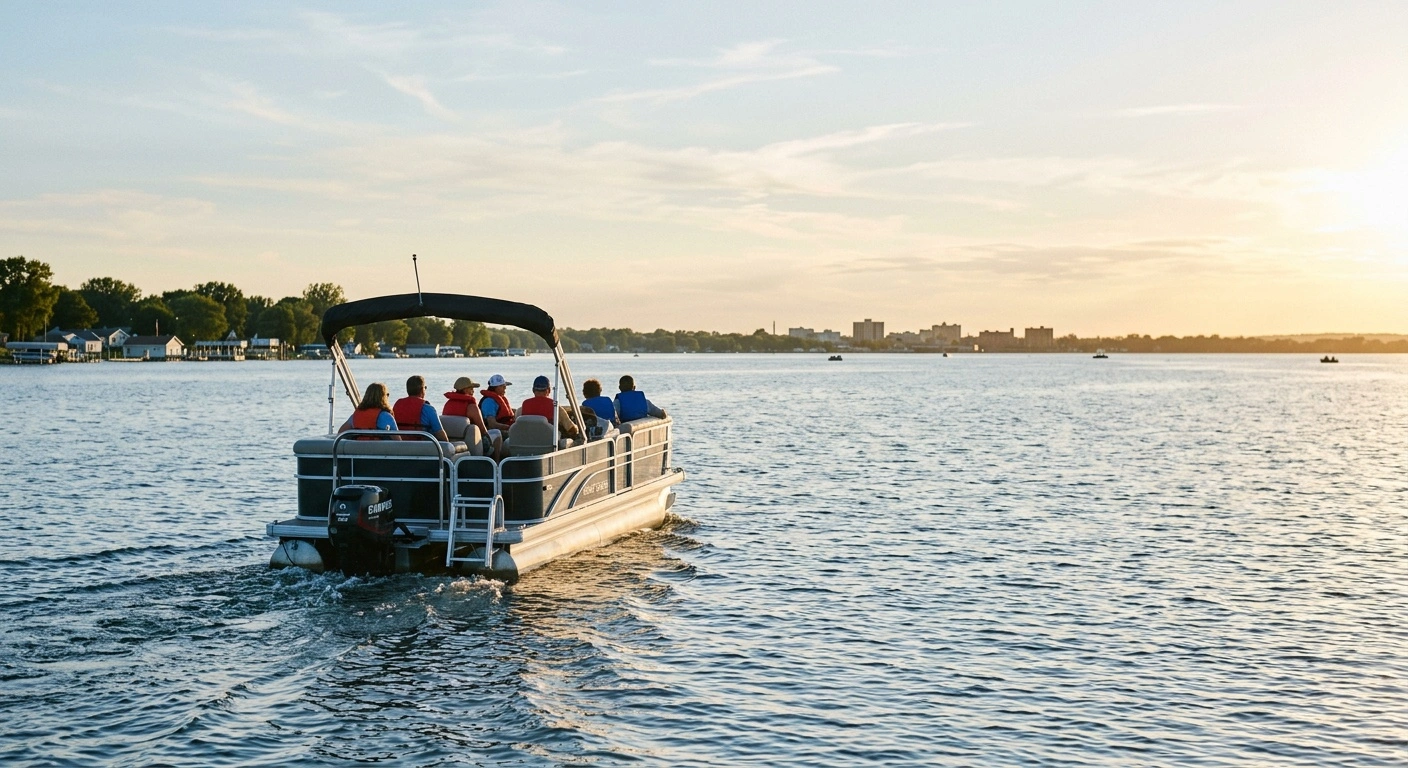
Boating Menasha to Oshkosh takes a pontoon down the long north-to-south reach of Lake Winnebago. Expect about 15 to 18 water miles each way, depending on your launch and dock. At a relaxed pontoon pace, the southbound run usually takes 90 minutes to two hours. Budget five to seven hours for a round trip with lunch.
This route suits boaters who have basic open-water experience. However, it is not a good first solo trip behind the wheel. Lake Winnebago is large and shallow, so moderate wind can produce steep, closely spaced waves. Choose a calm forecast, leave early, and carry enough fuel to turn back if conditions worsen.
A properly equipped pontoon handles the route well in fair weather. Keep an easy speed, balance the load, and ask passengers to remain seated while underway. Along the way, you will see the lake’s west shore and Oshkosh waterfront. Late-afternoon light gives the northbound trip a different look.
Planning a Boating Menasha to Oshkosh Route
Launch from a public ramp or marina with direct access to the Lake Winnebago side of Menasha. After clearing the harbor, turn south toward Oshkosh. Do not build your route around the Menasha lock or another controlled structure without checking current access. Lock schedules and operating conditions can change.
From the north end, angle toward the Neenah shoreline and follow the general line of the west shore. You can keep land in sight without running close to unfamiliar shallows. Never cut inside buoys to shorten the route. Use a current marine chart or mapping unit, especially near river mouths and harbors.
Kimberly Point and its lighthouse provide a useful visual reference near Neenah. Still, a landmark cannot replace a chart or GPS. Farther south, the lake opens into a broad run with fewer obvious reference points. Menominee Park and the Fox River mouth help identify your approach to Oshkosh.
Distances can look deceptively short across the lake’s flat horizon. Track your progress, speed, and fuel instead of judging distance by sight.
A Realistic Time and Distance Plan
These figures serve as planning estimates, not navigational measurements. Wind, traffic, boat speed, and your exact launch will affect the schedule. A moderate cruising speed saves fuel and gives passengers a smoother ride. However, it also requires a generous return window.
Add time for harbor speed limits, shoreline photos, docking, and lunch. On summer weekends, finding a dock or waiting for food may take longer than expected.
| Leg | What to Expect | Typical Planning Time |
|---|---|---|
| Menasha launch to open lake | Ramp traffic, harbor speed, and a final equipment check | 20 to 40 minutes |
| North end to the Neenah shoreline | Open-water navigation with Kimberly Point as a visual reference | 20 to 35 minutes |
| Neenah area to Oshkosh | The longest exposed stretch along the lake’s west side | 60 to 90 minutes |
| Oshkosh waterfront stop | Docking, walking, food, or a rest break | 1 to 2 hours |
| Return to Menasha | Changing wind and late-day traffic may slow the trip | 90 minutes to 2 hours |
An early-to-midmorning departure gives most crews enough time for lunch and a comfortable return. If the afternoon forecast calls for stronger wind, shorten the stop or turn back before Oshkosh. Sunset may look appealing, but fading light complicates an unfamiliar route. Set a firm turnaround time before departure and follow it.
Launching and Parking in Menasha
Choose a lake-side public launch or marina that can accommodate your tow vehicle, trailer, and pontoon. Menasha has access near the north end of Lake Winnebago. Before departure, confirm ramp hours, trailer parking, fees, and seasonal operations.
A convenient-looking ramp may lead to a channel or waterway separated from the lake by a lock. Call the launch operator or local parks department to confirm direct lake access. This quick check can prevent a major delay on departure day.
Prepare the boat in the staging area before backing down the ramp. Remove travel straps, load coolers, install the drain plug where required, and set out dock lines. Rigging on the ramp holds up every trailer behind you.
After launching, use only designated trailer spaces and keep valuables out of sight. Restrooms and other facilities vary by location, so check what the site provides before you arrive.
If You Need to Rent a Pontoon
Pontoon rentals operate around Lake Winnebago and the Fox Cities, but fleets and policies change. Tell the rental company that you plan to travel from Menasha to Oshkosh. A half-day rental may not provide enough time for the round trip.
Some agreements restrict travel distance, docking locations, or entry into rivers and channels. Ask about fuel capacity, refueling, return times, route limits, and weather cancellation terms. Also confirm which safety items the operator supplies.
The boat should carry properly fitting life jackets for every adult and child. Learn how to lower the anchor, operate the navigation lights, read the fuel gauge, and contact the rental company. If the company offers ramp delivery, ask who handles launching and retrieval.
Reserve early for summer Saturdays, holiday weekends, and major Oshkosh events. Demand can rise sharply during those periods.
Running the North End of Lake Winnebago
Harbor traffic, anglers, paddlers, and boats entering nearby channels often converge around the north end. Follow posted speed limits and no-wake restrictions until you reach open water. Then establish your course before accelerating.
Watch closely for fishing boats that drift or troll at low speed. Their lines may extend far behind the stern, so leave more passing room than usual.
Kimberly Point Park and its lighthouse can help you orient toward Neenah. Keep following your mapped route rather than steering directly at the landmark. A straight line may cross a marked hazard or unfamiliar shallow water.
The north basin may look protected while carrying a short, uncomfortable chop. If passengers start bracing themselves or spray crosses the bow, reconsider the full run. Turning back early is easier than doing so farther from the launch.
The Open-Water Run Down the West Side
South of Neenah, the trip settles into its longest open-water leg. Following the west side provides regular shoreline references and avoids extra mileage. Even so, the safe route may carry you well offshore.
Lake Winnebago contains reefs, rocky structure, and shallow areas that casual boaters may not notice. Follow your chart and respect every navigation marker. Never copy another boat simply because its operator appears to know a shortcut.
Adjust your speed to the wave spacing instead of holding a fixed cruising speed. A pontoon can pound hard when driven quickly into a close chop. The impact makes passengers uncomfortable and can send unsecured equipment across the deck.
Keep passengers seated and distribute weight evenly. Avoid overloading the bow. Check the sky and water behind you regularly because return-trip weather may form out of view.
Approaching Oshkosh and the Fox River
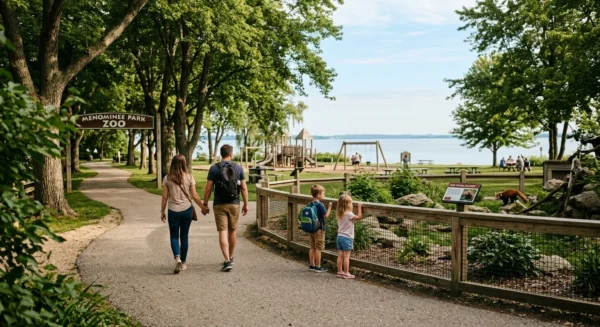
Menominee Park, the city lakefront, and the Fox River mouth define the Oshkosh approach. Slow down before traffic thickens. Watch for no-wake zones near docks, marinas, bridges, and riverfront facilities.
The river carries fishing boats, pontoons, larger cruisers, and vessels maneuvering toward slips. Hold a predictable course and stay out of the marked channel while choosing your destination.
If you plan to continue upriver, check current bridge information before leaving Menasha. A raised pontoon canopy may create more clearance concerns than the hull itself. Do not wait until you reach a bridge to assess the available height.
Wind, current, and passing wakes can complicate river docking. Set fenders and lines before approaching a dock or slip. If you need directions, idle outside the traffic lane and call the marina.
Where to Stop for Food or a Break
Oshkosh’s riverfront and marina areas offer the most practical meal stops. However, waterfront access does not guarantee guest docking. Some docks serve marina customers or seasonal tenants, while others impose short time limits.
Select a destination before leaving Menasha and call ahead. Confirm transient docking, operating hours, and kitchen service for your expected arrival time. Seasonal schedules, private events, construction, or water conditions may affect access.
On busy weekends, securing the pontoon and walking to a restaurant may save time. Bring snacks and plenty of nonalcoholic drinks in case the planned dock is full.
The operator must remain sober. Wisconsin boating-while-intoxicated laws apply, and alcohol can reduce judgment before steering becomes difficult. For a long restaurant visit, consider ending the boat trip in Oshkosh and arranging ground transportation.
How Wind Changes the Trip
Lake Winnebago’s size and shallow depth allow waves to build quickly. Wind aligned with the lake’s long north-south fetch can produce rough water. The same wind speed may feel much milder on a smaller inland lake.
An easterly wind can push waves toward the west shore and make this route uncomfortable. A westerly wind may reduce exposure near that shore. However, it can push a disabled or drifting pontoon away from land.
Check the marine forecast, wind direction, gusts, radar, and storm timing before launching. Conditions in Menasha may differ from those at the lake’s middle or south end. Review the forecast again before leaving Oshkosh.
Spring and fall bring cold-water risks even on pleasant days. Summer thunderstorms can also turn a calm afternoon into unsafe open water. If the forecast looks marginal, choose a shorter cruise near protected water.
What to Carry on the Pontoon
Beyond required equipment, carry a charged phone in a waterproof case and a backup power source. Bring dock lines, fenders, an anchor with adequate line, and a first-aid kit. A paper chart or offline map provides backup if your navigation display fails.
Pack sunscreen, drinking water, rain gear, and an extra warm layer. Air over the lake often feels cooler than the launch area, especially after sunset or in spray.
- Life jackets: Carry one properly fitting wearable jacket for each person, including child-sized jackets where needed.
- Navigation: Use a current chart or mapping device and keep a battery-independent backup.
- Docking gear: Bring at least two practical dock lines and enough fenders for the pontoon.
- Communication: Save contact details for the launch, rental company, marina, and emergency services.
- Weather gear: Pack rain protection, warm layers, hats, sunscreen, and drinking water.
- Emergency equipment: Carry required lights, sound-producing devices, fire equipment, and a first-aid kit.
Secure bags, towels, fishing gear, and inflatable items before accelerating. Make sure the operator knows the controls and emergency shutoff system. Rental customers should complete the full safety briefing before departure.
A few organized minutes at the dock can prevent a difficult search in rolling water.
Safety and Wisconsin Boating Rules
Carry a properly fitting life jacket for everyone aboard. Wearing one on open Lake Winnebago provides better protection than storing it beneath a seat. Follow current Wisconsin rules for children and other passengers subject to specific life-jacket requirements.
Wisconsin also sets age and boater-safety requirements for motorboat and personal watercraft operators. Check the Wisconsin Department of Natural Resources before your trip. Review current operator rules, navigation regulations, and required equipment.
The operator must maintain a safe speed, observe no-wake zones, yield correctly, and avoid impairment. Assign a lookout when traffic increases or visibility drops. Extra attention helps near the Fox River mouth.
Keep passengers inside the railings and off seat backs while underway. Do not allow anyone to stand at cruising speed. If the weather deteriorates, leave open water early instead of protecting a reservation or rental schedule.
Making a Safe Return to Menasha
Before leaving Oshkosh, check the wind, fuel level, and passenger readiness. Afternoon conditions may make the northbound ride rougher than the trip south. Give yourself enough daylight to reduce speed if necessary.
If waves exceed your crew’s comfort level, remain in a safe harbor and arrange another plan. Rental customers should call the operator promptly rather than waiting until closing time.
In fair conditions, the northbound run offers softer light across the west shore. Slow down before entering the Menasha harbor area. Watch for evening anglers and paddlers, then prepare lines before reaching the ramp or dock.
Move the pontoon to the staging area before unloading and securing it for the road. Do not block the ramp longer than necessary. For your next boating Menasha to Oshkosh trip, check the wind first and build the day around safe conditions.