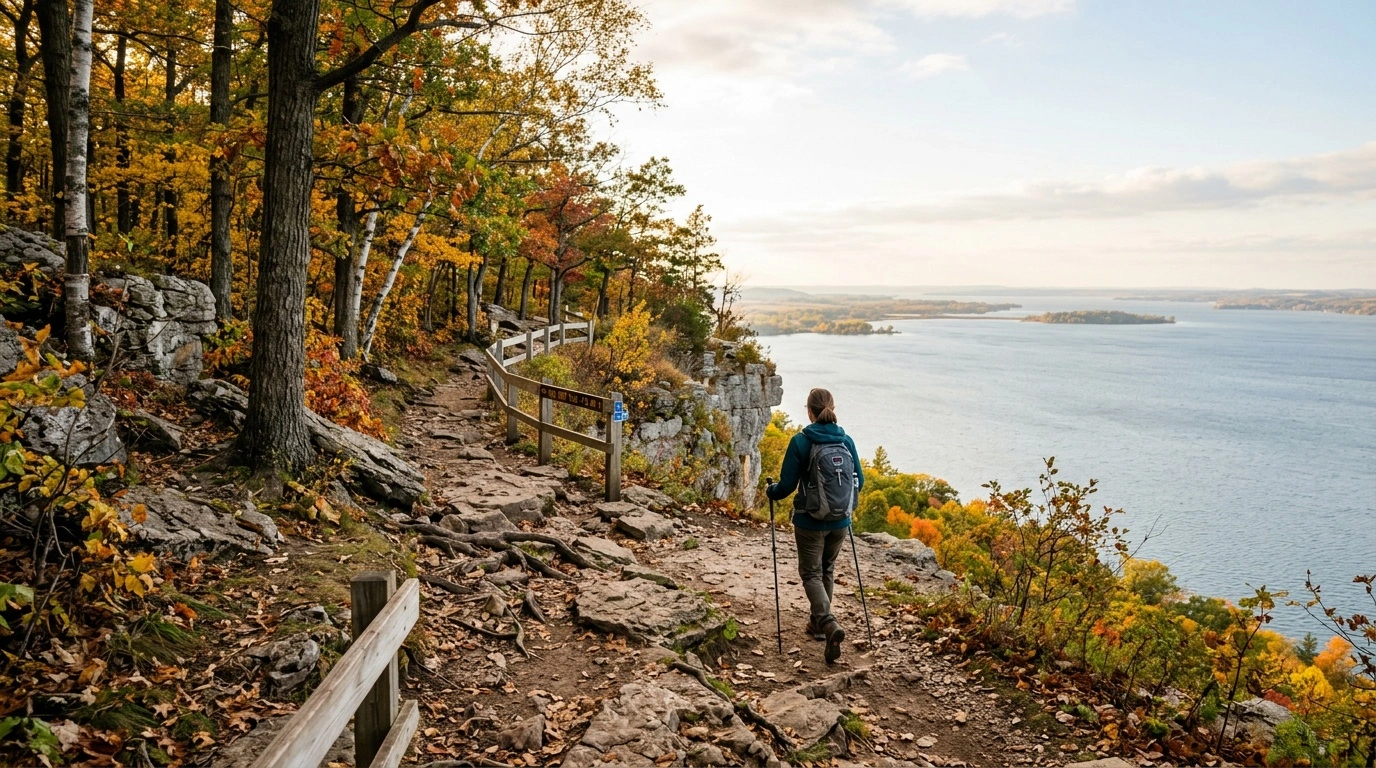
Hiking High Cliff State Park trails reveals how sharply the northeast shore rises above Lake Winnebago. The park sits along the Niagara Escarpment, creating varied terrain within a compact area. Routes range from gentle pond loops to rocky climbs with wide lake views. Most visitors can plan a rewarding outing in two to four hours.
The Red Bird Trail suits hikers who want distance, woodland, and overlooks. Butterfly Pond Nature Trail offers a shorter route with a gentler surface. The Lime Kiln and Indian Mound trails add industrial and Indigenous history to a visit.
Late spring through fall provides the widest choice of routes. Mornings tend to be cooler and quieter, with better bird activity. Late afternoon brings warmer light across Lake Winnebago. Before hiking High Cliff State Park trails, save or photograph a current park map.
A Practical Plan for Hiking High Cliff State Park Trails
Start by choosing among three types of walks: an easy nature loop, a longer escarpment hike, or a history-focused route. Families and visitors with limited time can begin at Butterfly Pond. Afterward, drive or walk to an established lake overlook.
Hikers seeking more distance can use the Red Bird Trail as the day’s main route. Add shorter paths only if time, weather, and footing allow. The Lime Kiln Trail provides a middle option with woodland, limestone, and historic structures.
Allow more time than the mileage suggests. Views, interpretive signs, wildlife, and rough footing can slow your pace. Two hours usually allows for one primary trail and an overlook. Three to four hours leaves time for connected trails, historic sites, and lunch.
Choose a shorter loop if rain, wind, or ice makes the escarpment hazardous. Storms and maintenance can also affect trail access. Check current Wisconsin Department of Natural Resources notices before leaving home.
Butterfly Pond Nature Trail for an Easy Start
Butterfly Pond Nature Trail provides the park’s most approachable walk. The short, surfaced loop passes pond, wetland, prairie, and woodland habitat. Its terrain feels much gentler than the rocky escarpment routes.
The compact loop works well for families, casual walkers, and many visitors using mobility aids. Interpretive features explain the surrounding habitats without requiring a guided program. However, snow, ice, standing water, or maintenance may affect access.
Visit in the morning for birds and softer light around the pond. Late summer brings active insects and flowering prairie plants. Mosquitoes often increase after rain, so carry repellent even for a brief walk.
Visitors with specific accessibility needs should contact the park office before arriving. Staff can provide current information about surfaces, parking, and nearby facilities.
Red Bird Trail for Escarpment Views
The Red Bird Trail serves as the park’s primary longer hiking route. It passes through hardwood forest and follows sections of the limestone escarpment. Plan for a several-mile outing rather than a quick overlook stop.
Rolling ground, exposed roots, rocks, and steeper slopes make this trail more demanding. Regular hikers should find it manageable in dry conditions. Rain and fallen leaves can make the limestone much harder to navigate.
Choose this route for the fullest sense of High Cliff’s terrain. Openings along the escarpment reveal the broad northern basin of Lake Winnebago. Haze, wind, and passing weather can change the view within minutes.
The observation tower area may provide an additional viewpoint when open. Weather or maintenance can affect access. Stay behind barriers and well back from cliff edges. Limestone ledges may be loose, undercut, or slippery.
Lime Kiln Trail and the Quarrying Story
The Lime Kiln Trail explains how quarrying shaped the park’s landscape. Workers once quarried local limestone and burned it in kilns. Remnants of that operation remain near the route.
View the stone structures from established paths and never climb them. Uneven rock and abrupt grade changes make sturdy footwear essential. Keep children close near the quarry and kiln areas.
This moderate walk provides more texture and climbing than Butterfly Pond. However, it requires less time than a full Red Bird circuit. The forest canopy offers summer shade but can keep stone and soil damp after rain.
During fall, leaves often conceal roots, holes, and loose rock. Follow all posted closures around the historic structures. Never create a shortcut around a barrier.
Indian Mound Trail and a Sacred Landscape
Indian Mound Trail passes effigy mounds created by Indigenous people long before the park opened. These cultural and burial features require care and respect. Do not climb, cross, picnic on, or use the mounds as shortcuts.
Stay on the marked path and explain the site’s importance to children. Interpretive signs provide historical context. Approach the area quietly and leave stones, plants, and artifacts in place.
The short route fits easily into a history-focused visit. Pairing it with the lime kilns shows two distinct periods of human activity. Treat each site on its own terms rather than presenting them as equivalent.
If the park closes or reroutes part of the trail, follow the posted route. Walking around a barrier can damage cultural features and surrounding vegetation.
Building a Half-Day Hiking Route
For a balanced half-day, begin at Butterfly Pond early in the morning. Next, move to the escarpment before the busiest part of the day. Use the Red Bird Trail for the main hike and pause at established viewpoints.
Finish near the lime kilns or Indian Mound Trail, depending on your energy and interests. Eat lunch in a designated picnic area. Avoid stopping along narrow trails or near cultural sites.
A shorter itinerary can begin at the lime kilns and continue to an overlook. End at Butterfly Pond for an easy final walk. This order lets families tackle the roughest terrain while everyone still has energy.
If mud, ice, or crowds affect the escarpment, focus on Butterfly Pond and developed park areas. Keep a current map nearby throughout the visit. Connected paths can turn an improvised loop into a much longer hike.
What the Terrain Actually Feels Like
High Cliff does not offer mountain hiking, but the park is far from uniformly flat. The Niagara Escarpment creates rocky benches, wooded slopes, short climbs, and abrupt drop-offs. Some sections feel broad and forgiving. Others demand attention with every step.
Tree roots and broken limestone cause most footing problems in dry weather. Mud, wet leaves, snow, and ice increase the difficulty. Good shoes matter more than heavy gear on most routes.
Trekking poles can help on slick descents, although most visitors will not need them. Hiking shoes or trail-running shoes with grippy soles work well in warm, dry conditions. Carry water because summer humidity and short climbs can make the park feel warmer than expected.
Do not rely on cell service for navigation. Carry a paper map or save a digital copy before starting, especially when connecting several trails.
When to Hike High Cliff State Park
Late spring brings green woodland, migrating birds, and cool hiking temperatures. It also brings mud and mosquitoes. Check recent rainfall before choosing a rocky or low-lying route.
Summer usually provides dependable access to park facilities. However, midday heat and weekend crowds can make early morning more comfortable. Carry water and sun protection, even on shaded trails.
Fall often brings comfortable temperatures and colorful hardwoods along the escarpment. Views expand after some leaves drop. Parking lots and popular overlooks can fill quickly on clear autumn weekends.
Winter makes High Cliff quieter and more demanding. Packed snow may provide firm footing, but thaw-and-freeze cycles create hard ice on shaded slopes. Traction devices may help, and daylight fades early.
Check park notices before a winter trip. Grooming, closures, and permitted trail uses can vary with conditions.
Birds, Wildlife, and Lake Views
Forest, prairie, wetland, bluff, and shoreline habitats support varied wildlife. Depending on the season, visitors may see woodpeckers, songbirds, waterfowl, and birds of prey. Spring and fall migration can bring especially active mornings.
Butterfly Pond provides an easy place to watch the edges of several habitats. Move slowly and listen before scanning the trees. Calls and moving leaves often reveal birds hidden high in the canopy.
Deer and smaller mammals may appear early or late in the day. Give every animal space and never offer food. Feeding wildlife can change its behavior and create problems near picnic areas.
Binoculars add value without much weight. A large camera remains optional because many of the park’s strongest views are broad landscapes.
Parking, Admission, and Accessibility
High Cliff State Park has several developed parking areas. Visitors can start near different trails instead of relying on one central trailhead. Arriving early improves parking options on summer weekends and peak fall-color days.
Wisconsin requires a state park vehicle admission sticker. Check current prices and purchasing options before arriving. If a lot is full, use another designated area rather than parking along a narrow road.
Butterfly Pond offers the clearest accessible trail experience in the park. Escarpment routes include natural surfaces, roots, stone, grades, and other barriers. Weather can quickly change an otherwise manageable path.
Seasonal availability and accessibility vary among restrooms, picnic sites, and other developed facilities. Visitors using wheelchairs, walkers, or strollers should contact the park for current details. Do not rely only on an older map.
What Else to Do Near the Trails
The Lake Winnebago shoreline, marina area, picnic grounds, and campground can extend a hiking day. After exploring the escarpment, head toward the water to view the bluff from below. That angle makes its height and shape easier to understand.
The waterfront also works well for lunch when winds remain light. Lake breezes can turn cool, even on warm afternoons. Pack an extra layer if you plan to stay late.
High Cliff sits on Lake Winnebago’s northeast shore. Menasha, Neenah, and the Fox Cities lie to the northwest. Appleton sits nearby along the Fox River, not directly on Lake Winnebago.
A meal or waterfront stop in a nearby community can round out the day. Seasonal restaurants, concessions, and park facilities may keep limited hours. Confirm operating times before your hike.
Trail Safety on the Escarpment
Stay on marked trails near cliff edges, quarry remnants, and cultural sites. Never cross a railing or barrier for a photograph. Grass and leaves can hide unstable limestone ledges.
Keep children within reach near overlooks. Explain the hazards before leaving the parking area. Dogs must remain leashed and under control, and owners must follow posted area restrictions.
Check the forecast and radar before setting out. Thunderstorms, high winds, and heavy rain can make viewpoints and rocky trails dangerous. Leave exposed areas if you hear thunder or notice rapidly changing weather.
Carry water, insect repellent, a basic first-aid kit, and a map. During hunting seasons, review current park guidance and wear visible clothing where appropriate. Solo hikers should share their planned route, especially in winter or late in the day.
Good to Know Before You Go
Restroom and water availability may change by season. Bring enough drinking water instead of depending on a fountain. Check Wisconsin Department of Natural Resources updates for closures, maintenance, and storm damage.
Pets may enter designated areas when leashed, but posted restrictions still apply. Carry waste bags and remove pet waste from trails and picnic areas. Review current rules if you plan to visit a beach or building.
Pack shoes with traction, a light layer, sun protection, and warm-season insect repellent. Stay off the effigy mounds and away from unprotected escarpment edges. Do not climb the lime kilns or quarry structures.
Weekday mornings usually bring the lightest crowds. Summer weekends and peak fall-color afternoons draw more visitors. If a trail looks muddy or parking becomes tight, use developed overlooks and easier paths.
Plan a Return Visit in Another Season
A first visit often centers on the lake view, but later trips reveal seasonal changes across the forest and escarpment. Spring opens sightlines through bare trees. Summer fills the canopy, while autumn adds color and wider views after leaf drop.
Winter exposes the shape of the limestone terrain but demands greater care underfoot. Watch park reports for trail conditions, facility updates, fall color, and winter closures. Choose a route that matches your group’s ability and the day’s weather.
Hiking High Cliff State Park trails rewards a slower pace. Leave time for an unplanned overlook, pond-edge birds, or a close look at quarry stone. Turn around whenever footing or weather stops feeling safe.